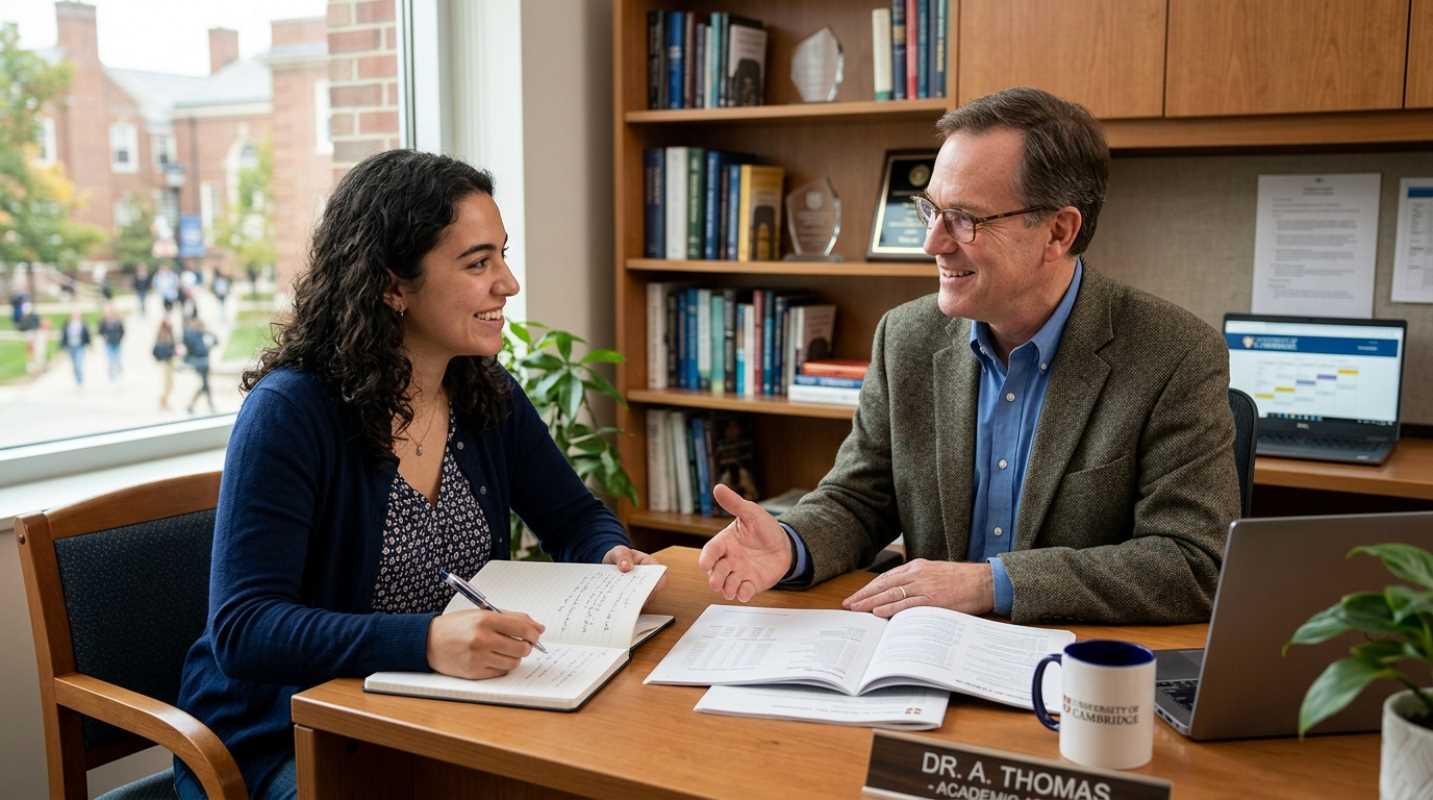
How many times have you looked at your academic advisor as just a gatekeeper? You know the drill. You need a registration PIN to sign up for classes, so you book a quick fifteen-minute slot, nod along to some course codes, and walk out.
But treating your advisor like a human rubber stamp is a massive missed opportunity.
A landmark longitudinal study published in January 2026 tracked over 500 graduate students across top universities like Stanford and Columbia. It found that a student's trust in their advisor, both in their professional capability and personal connection, directly predicts their academic motivation and mental well-being.
When you build a real partnership, your academic life changes.
Data from Penn State University shows that student retention improves substantially when students meet with advisors to discuss both academic and life challenges.² Similarly, when the University of Utah restructured its advising to focus on coordinated, personalized care, advising appointments rose by eight percent in a single year.³
Right now, the stakes are incredibly high. Recent data shows that over half of recent college graduates struggle to find a job that matches their qualifications, and many remain underemployed a decade later. Traditional, class-by-class advising is failing to bridge this gap.
You need to define mutual expectations early in the relationship. Do not wait for your advisor to map out your life. Take the initiative to establish how you will work together from day one.
Mastering Advisor Communication Quality Over Quantity
How do you actually start building this connection without being annoying? It starts with how you communicate.
Advisors are incredibly overwhelmed right now. A study in Academic Advising Today highlighted that advisors are carrying massive emotional weight, acting as life coaches, mentors, and recruiters all at once.¹ They are burning out, which means they do not have time for sloppy, last-minute emails.
If you want to stand out, make their lives easier.
Here are a few ways to keep your communication sharp
• Write clear subject lines: Include your student ID and a brief description of your needs.
• Give them time to respond: Do not send follow-up emails after three hours. Give them a solid 24 to 48 hours before politely checking in again.
• Ask targeted questions: Instead of emailing "What classes should I take?", try "I am choosing between these two electives for my major, and here is how they fit my goals. Which do you recommend?"
This approach builds an immediate reputation of reliability. When you show up organized, you show respect for their time. That is how you turn a transactional contact into an advocate.
Collaborative Academic Planning Owning Your Journey
Let's talk about course planning. Too many students walk into advising appointments expecting the advisor to do the heavy lifting.
You need to own your academic journey.
Your university likely has degree-audit dashboards or predictive scheduling tools. Use them. Before you sit down for your meeting, draft a couple of potential schedules on your own.
When you meet, you can focus on the big picture instead of spending twenty minutes looking up course codes.
This collaborative planning is also your chance to be honest about your challenges. Are you working twenty hours a week? Are you struggling with a specific subject? Tell them.
But what happens if you disagree with their advice?
It happens. Maybe they suggest a class you really do not want to take, or they push you toward a path you do not love.
Handle it professionally. Do not get defensive. Ask clarifying questions like, "Can you help me understand how this specific course fits into my long-term plans?"
Remember, they have seen hundreds of students handle these paths. They might see roadblocks you are completely blind to.
Beyond the Classroom Building Mentorship
Once you have the basics down, it is time to move beyond the course catalog. Your advisor is a gateway to the broader professional world.
Have you asked them about their own academic journey? People love talking about their work. Asking insightful questions about their field of research or their career path is a great way to build a deeper connection.
You should also use these meetings to hunt for opportunities outside the lecture hall
• Ask about research: Find out if there are faculty members looking for undergraduate research assistants.
• Inquire about internships: Advisors often get direct notices from employers looking for students in your major.
• Build a mentoring constellation: Do not expect one advisor to be your everything. Use your primary advisor as a starting point, but actively seek out other professors, alumni, and industry professionals to build a diverse support network.
Consistency matters here. Do not just show up when you need a signature. Send a quick email update mid-semester to let them know how that tough class is going or to share a small win.
Navigating Challenges and Maintaining the Connection
What if you just do not click with your assigned advisor? It is a common issue.
First, do not take it personally. Advisors are human, and sometimes personalities clash. If the relationship is truly stagnant, look into your department's policy for switching advisors. Most schools make this process relatively painless.
But before you jump ship, try to meet them halfway. Many advising experts recommend looking for mentors who use structured approaches to support students.
When you do get great guidance, do not forget the power of a simple thank-you email. A little gratitude goes a long way, especially for staff members who spend their days dealing with stressed-out students.
In the long run, the effort you put into this relationship pays off. Years from now, when you need a letter of recommendation for graduate school or a reference for your dream job, you will not be scrambling to find a professor who remembers your face. You will have a dedicated advocate who knows your story, your work ethic, and your potential.
Sources:
1. NACADA Why Do Advisors Leave
https://nacada.ksu.edu/Resources/Academic-Advising-Today/View-Articles/Why-Do-Advisors-Leave-the-Profession
2. Penn State University Academic Advising Study
https://www.psu.edu/news/office-undergraduate-education/story/advising-appointments-correlated-higher-student-retention
3. University of Utah Advising Restructuring
https://attheu.utah.edu/facultystaff/academic-affairs-launches-new-advising-structure-to-support-student-success/