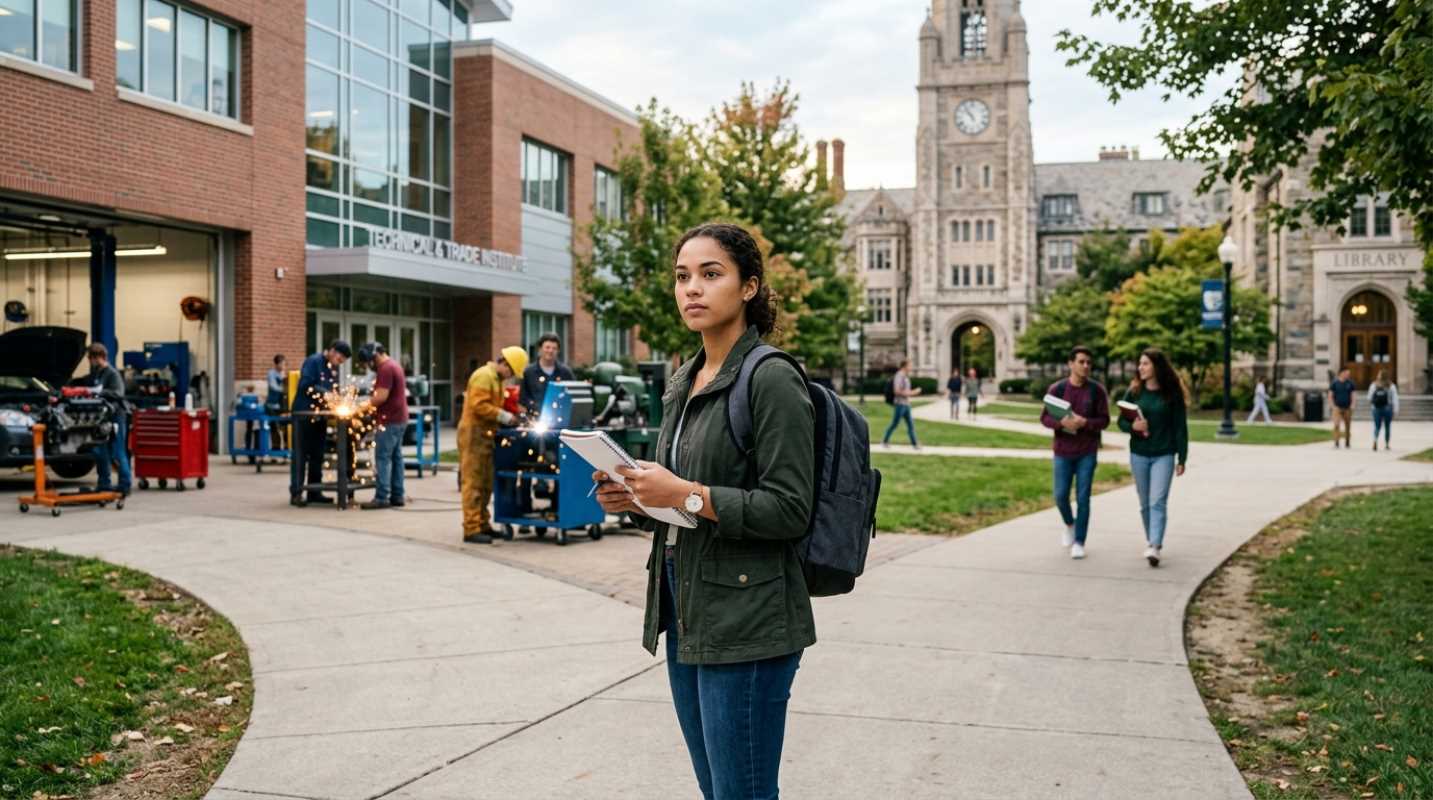
You did it. You accepted the admission offer, packed your bags, and now you are standing on the edge of a massive new chapter. Being the first person in your family to attend college is a major achievement. It represents hours of hard work, late nights, and a determination to build a new path.
But let's be honest for a second. It can also feel terrifying. When you look around at other students who seem to know exactly where to go and what to do, you might feel a sudden wave of self-doubt. Do I actually belong here?
The short answer is yes. You earned your spot just like everyone else. As you step onto campus for the 2026 academic year, you are joining a massive community. In fact, there are about 8.2 million first-generation college students in the United States. They represent 54% of all undergraduates. You are actually in the majority.
This guide is your roadmap to handle the transition. We will cover how to find your way around, where to get help, how to handle family expectations, and how to master your classes. You do not have to figure this out by trial and error.
Mastering Campus Navigation and Logistics
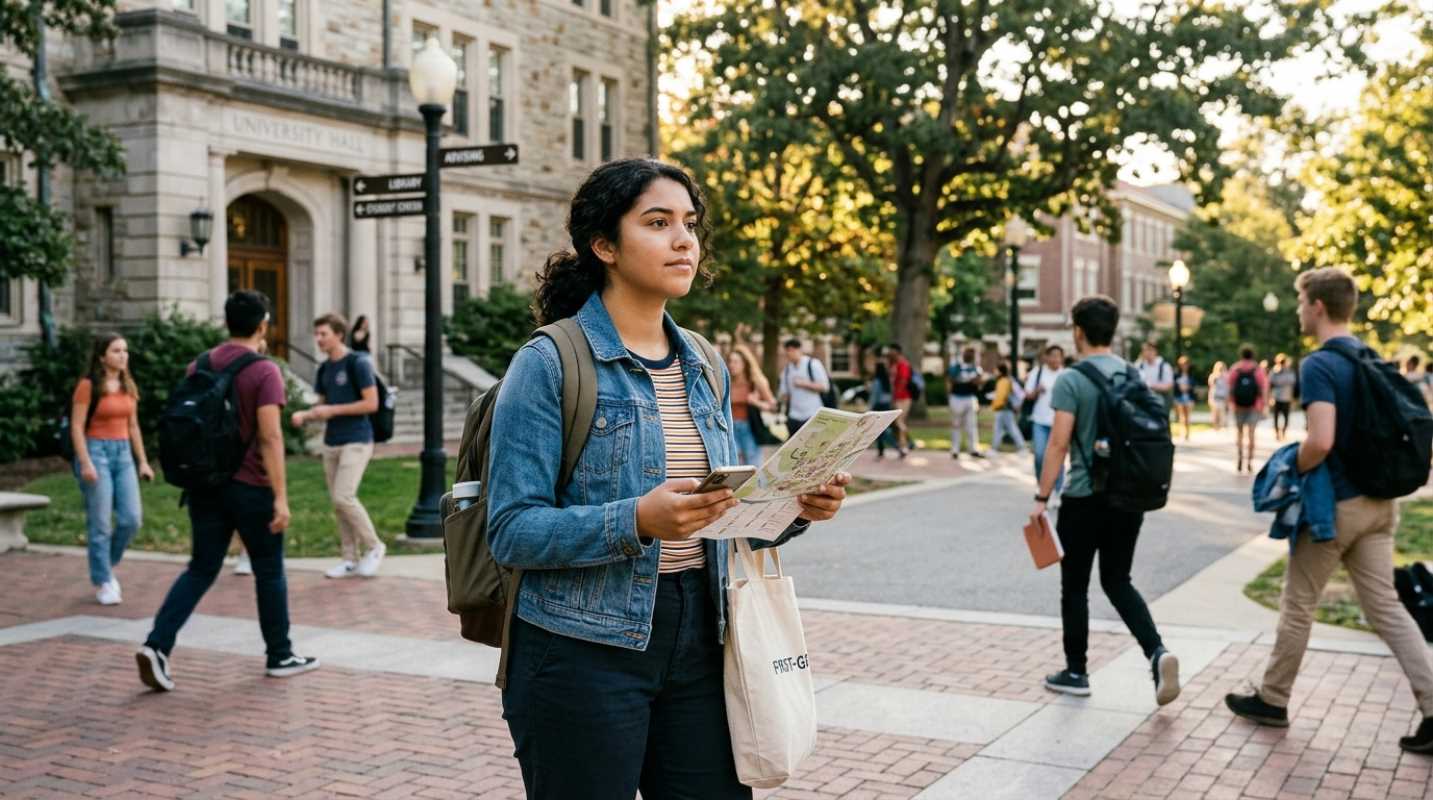
Before the chaos of the first week hits, you need to get your bearings. Walking onto a campus with thousands of students can feel like trying to handle a small city. Do not wait until ten minutes before your first class to find your lecture hall.
Use the days before classes start to do a dry run. Grab your schedule, open up the digital campus map on your phone, and physically walk the route of your classes. Find the exact rooms. Figure out how long it takes to walk from the science building to the library.
Although you are walking around, locate these key spots
• The Registrar: This is where you go for enrollment and official transcript issues.
• The Financial Aid Office: You will want to know where this is to sort out scholarships and loans.
• Student Health and Counseling Services: Knowing where to find medical and mental health support is important.
• The Campus Dining Halls: Find the best spots to grab a quick bite between classes.
Taking advantage of student orientation services is also incredibly helpful. These events are not just icebreakers. They are designed to show you where things are and introduce you to staff members who want to help you succeed.
Using First-Gen Student Support Systems
One of the biggest hurdles for first-generation students is trying to do everything alone. There is a persistent myth that asking for help is a sign of weakness. It is not. It is a sign of resourcefulness.
Did you know that continuing-generation students use campus resources at twice the rate of first-generation students? This gap is one reason why only 24% of first-generation students graduate within six years, compared to 59% of their peers whose parents have degrees.¹
To close this gap, you need to build your support team early. Start by finding your campus TRIO Student Support Services office. TRIO is a federally funded program designed specifically to help first-generation students succeed. They offer free peer mentoring, academic tutoring, and financial counseling.
Navigating financial aid can also be a massive headache. The rollout of the simplified FAFSA for the 2024–2025 academic year was plagued by technical glitches and delays, causing successful submissions to drop nearly 30% compared to the previous year.² This disproportionately locked first-gen and low-income students out of timely aid, making campus support networks even more important.
You should also look into campus-specific first-gen initiatives and peer mentorship programs. When you connect with upperclassmen who were once in your shoes, you get a direct line to advice. As Mattias Lopez, a student mentor, explains, it is about creating a support system and forming friendships that help you manage stress and find resources.
Do not ignore your mental health either. The pressure to succeed can take a heavy toll. Recent research shows that 40.3% of first-generation students experience symptoms of major depressive disorder, and 44.6% deal with generalized anxiety.³ Getting connected with campus counseling early can give you the tools to manage this stress before it becomes a lot of.
Managing Family Expectations and Cultural Shifts
Going to college often creates an emotional gap between your life at school and your life at home. Your family loves you and wants you to succeed, but they might not understand the daily realities of higher education. This is especially true if your household values family presence and immediate support, which can make leaving feel like a betrayal.
You might feel a sense of guilt for leaving home, spending money on tuition, or not being around to help with household chores. This guilt is normal, but you can manage it through clear communication.
First, you need to translate the college experience for your family. Explain that college is not like high school. You are not just in class for a few hours and then free. For every hour you spend in a lecture, you need to spend two to three hours studying independently.
Help your family understand your schedule by using these approaches
• Share your calendar: Let them know when you have classes, study blocks, and exams so they know when not to call.
• Set regular call times: Establish a specific time each week to catch up so they feel connected without interrupting your study time.
• Explain your boundaries: Let them know that missing a family Sunday dinner to study for a midterm is not a rejection of them, but an investment in your shared future.
• Invite them to campus: Bring your parents or guardians to orientation or family weekend events to demystify your new world.
Family counselors suggest parents transition from trying to direct your daily decisions to acting as a supportive coach. They do not need to understand your biology homework to listen, celebrate your small wins, and keep you motivated.
Academic Helpment and Self-Advocacy
Every college campus has a hidden curriculum. These are the unwritten rules and expectations that continuing-generation students often learn from their parents, but first-gen students have to figure out on their own.
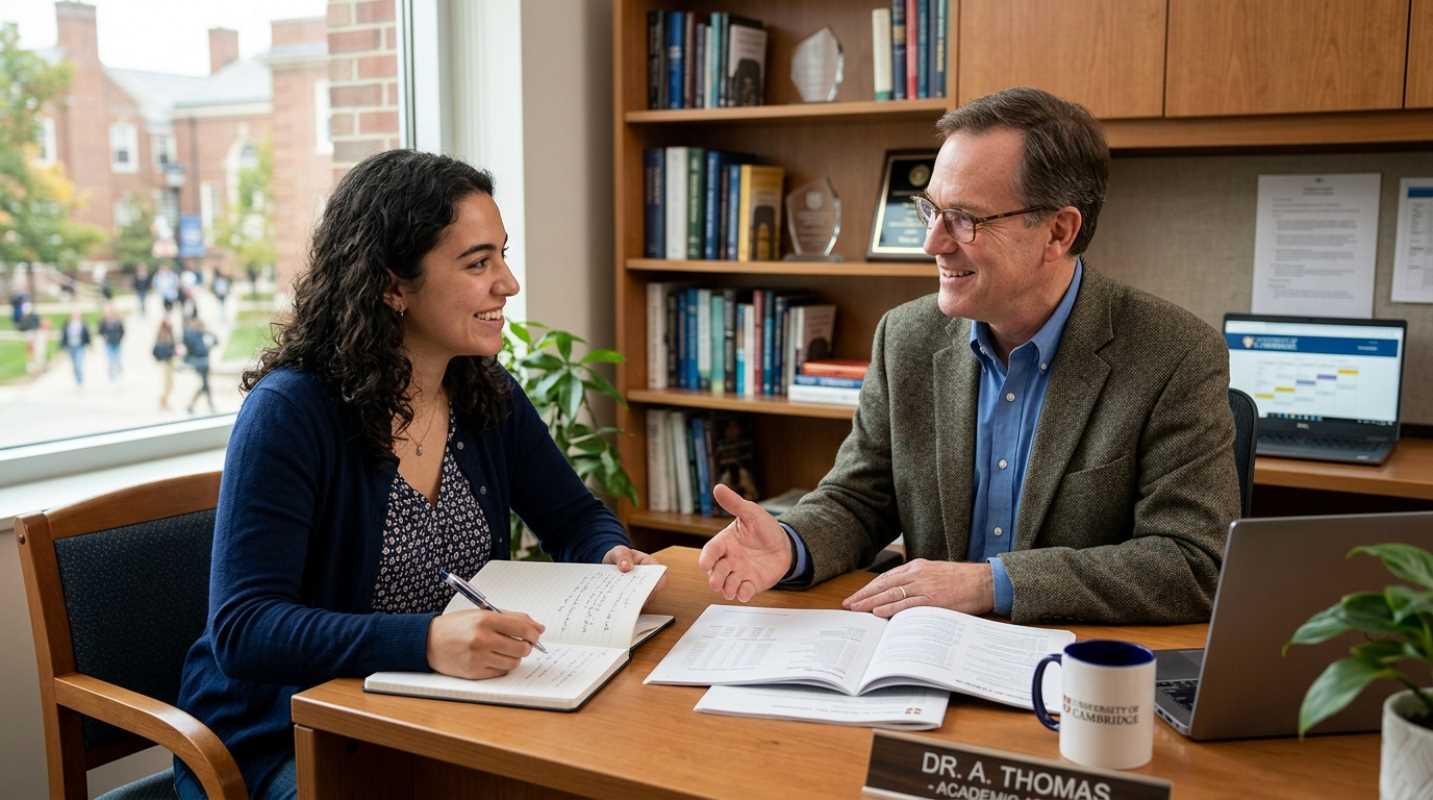
The hidden curriculum includes things like understanding how to read a syllabus, how to register for classes, and how to use office hours. Many first-gen students think office hours are like detention, a place you only go if you are failing. That is completely wrong.
Office hours are designated times when your professors sit in their offices specifically to talk to you. You can use this time to ask questions about a lecture, talk about career goals, or get feedback on a paper draft. Building relationships with professors during office hours is how you secure research opportunities and letters of recommendation later on.
To advocate for yourself academically, treat college like a professional environment. This means
• Read the syllabus: This document is your contract for the class. It lists all assignments, deadlines, and grading policies. Check it before asking your professor a basic question.
• Speak up early: If you do not understand a concept in week two, do not wait until the midterm in week eight to get help. Go to the math lab or writing center immediately.
• Communicate proactively: If you have an emergency, email your professor before the assignment is due, not three days after.
Getting off to a strong start requires taking concrete actions during your very first week on campus. Here are the most effective steps you can take to set yourself up for academic and personal success.
Your First-Gen Identity is Your Superpower
It is easy to look at what you do not know about college and feel like you are at a disadvantage. But being a first-generation student is actually a massive strength.
You possess a level of resilience, adaptability, and resourcefulness that many of your peers have never had to develop. You had to handle the complex college application process, and perhaps even stressful financial aid delays, largely on your own. You are already a proven problem solver.
Do not try to hide your first-gen identity. Own it. Share your unique perspective in class discussions. Connect with other first-gen students and build a community based on shared determination.
Your education is yours to shape. Commit to being an active participant in your classes, your campus, and your own future. You belong here, and day one is just the beginning of what you will achieve.
Sources:
1. Report: First-generation college students graduate at lower rates
https://www.power107radio.com/national/report-first-generation-college-students-graduate-at-lower-rates/
2. FAFSA Issues: Guide for Parents and Students
https://www.ascentfunding.com/blog/fafsa-issues-guide-for-parents-and-students/
3. Supporting First-generation College Students in 2025: A National Perspective
https://www.firstgenforward.org/hubfs/FGF%20Press%20Releases/Press%20Release_%20Supporting%20First-generation%20College%20Students%20in%202025_%20A%20National%20Perspective_September_2025-1.pdf?hsLang=en
*This article on localplan is for informational and educational purposes only. Readers are encouraged to consult qualified professionals and verify details with official sources before making decisions. This content does not constitute professional advice.*